
One day your dog is the same easygoing companion you’ve always known. The next, they’re growling at your partner, snapping at a guest, or lunging at a dog they used to walk past without a second glance. It’s unsettling, and it’s normal to feel scared, embarrassed, or even a little betrayed.
Here’s the good news: aggression that appears “out of nowhere” almost always has a clear cause. Dogs don’t wake up one morning and decide to become dangerous. Something changed, whether that’s their body, their environment, or what they’ve learned works to make a scary situation go away. Figuring out what changed is the first step to fixing it.
If your dog has already bitten or come close to biting someone, please don’t wait and hope it resolves on its own. Book a vet visit first to rule out a medical cause, then bring in a professional who works specifically with aggression and reactivity so you have a real plan instead of guesswork.
Below are the seven most common reasons dogs suddenly become aggressive, along with what to watch for and what to do about each one.
1. Underlying Pain or Illness
This is the cause owners overlook most often, and it’s usually the first thing a good trainer or vet will ask about. Dogs are experts at hiding pain. A dog with arthritis, a slipped disc, an ear infection, dental disease, or even a stomach issue may tolerate being touched, hugged, or approached just fine until one day it hurts too much, and the only way they know how to communicate “stop, that hurts” is to growl or snap.
Watch for aggression that shows up specifically when you touch a certain area, pick your dog up, ask them to jump on furniture, or get near them while they’re lying down. A sudden change in appetite, energy, or gait alongside the aggression is another red flag.
What to do: schedule a full veterinary exam before you assume this is a training problem. No amount of obedience work fixes a dog who is in pain.
2. Fear or a Bad Experience
Fear is behind more “aggressive” behavior than most people realize. A dog that gets cornered, startled, or hurt during an encounter, whether it’s a rough interaction at the dog park, a scary vet visit, or even an overly enthusiastic child, can come away from that single experience with a lasting association: that type of person, dog, or situation equals danger.
The tricky part is that fear aggression often builds gradually and then seems to “suddenly” appear once the dog decides that growling and lunging work better than freezing or trying to get away. If your dog is stiffening, showing whale eye, tucking their tail, or trying to create distance before the growling starts, fear is very likely the driver.
Our anxiety and hyperactivity program was built around exactly this pattern: dogs whose nervous system is stuck in overdrive and whose aggression is really a fear response wearing a scarier costume.
3. Resource Guarding
Resource guarding is exactly what it sounds like: a dog protecting something they consider valuable, whether that’s food, a favorite toy, a bed, a person, or even a spot on the couch. It can appear suddenly if your dog recently had something taken away too abruptly, if a new pet or child started competing for the same resources, or if the behavior was quietly building for months and finally reached a point where you noticed it.
Common signs include freezing over a bowl or bone, a hard stare when someone approaches, or snapping when a hand reaches toward something they’re holding. Resource guarding is one of the most trainable issues on this list when it’s caught early and handled correctly, but it tends to get worse, not better, if it’s ignored or punished.
4. Redirected Aggression
This one catches a lot of owners off guard because the aggression doesn’t seem to make sense in the moment. Redirected aggression happens when a dog is highly aroused by one thing, often another dog on the other side of a fence or window, and can’t reach it. All that frustration and adrenaline has to go somewhere, so it gets redirected onto whoever or whatever is closest: another dog in the house, or even the owner trying to grab their collar.
If your dog’s “sudden” aggression only happens in the seconds right after they were barking, lunging, or fixated on something else, this is almost certainly what’s happening. The fix isn’t punishing the redirected bite, it’s managing and retraining the arousal trigger that started the chain reaction in the first place.
5. A Change in the Household or Routine
Dogs are creatures of pattern, and they notice disruption faster than most owners expect. A new baby, a new pet, a move, a family member leaving for college, a change in work schedule, or even rearranged furniture can shift a dog’s sense of security enough to trigger defensive behavior that looks like it came from nowhere.
This is especially common with protective or territorial aggression, where a dog becomes reactive toward guests, delivery workers, or anyone entering “their” space after a change makes them feel like they need to take on more responsibility for guarding the home.
6. Lack of Structure and Unclear Communication
Dogs feel safest when the rules are consistent and they know what’s expected of them. When there’s no clear structure at home, inconsistent responses to jumping, growling, or pushy behavior, mixed signals from different family members, a dog can become increasingly unsettled and start testing boundaries in ways that escalate over time until it looks sudden.
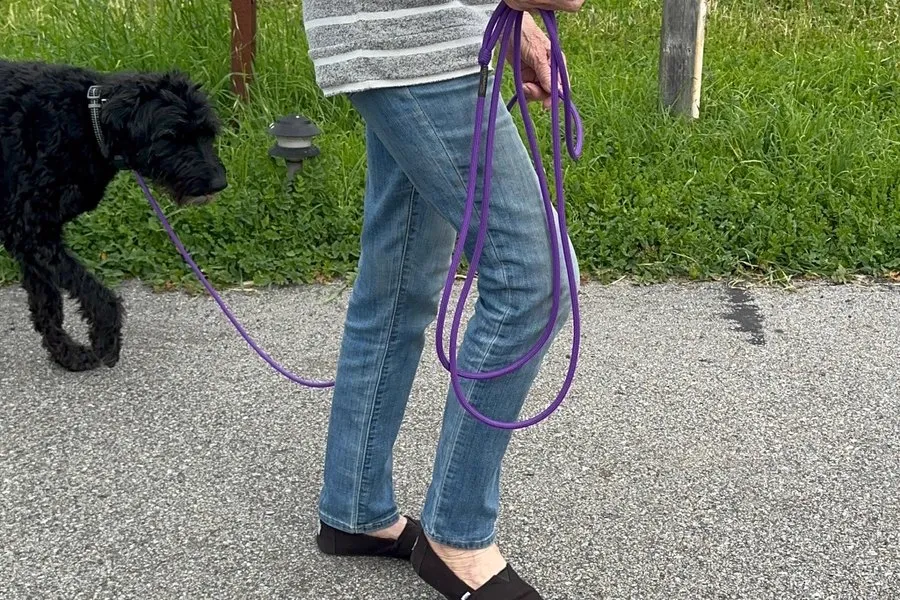
This isn’t about dominance in the outdated sense some people still use. It’s about a dog who genuinely doesn’t understand what’s expected of them and is filling that gap with anxious, reactive decision-making. Rebuilding clear, calm structure through something like our basic life skills training often resolves this type of aggression faster than owners expect, because the dog finally has a framework to relax into.
7. Age-Related Changes: Adolescence or Cognitive Decline
Age plays a bigger role in sudden aggression than most people realize, just at opposite ends of a dog’s life.
Young dogs going through adolescence, roughly six to eighteen months depending on the breed, often go through a phase where hormones, growing confidence, and a developing brain combine to produce reactions that weren’t there as a puppy. This is a real developmental stage, not a sign your dog is “turning bad.”
On the other end, senior dogs can develop canine cognitive dysfunction, essentially a form of dementia, which can cause confusion, disorientation, and aggression toward familiar people or pets. Vision or hearing loss in older dogs can also lead to startle-based snapping when they’re approached without warning.
What to Do If Your Dog’s Aggression Feels Sudden
Start with a veterinary exam to rule out pain or illness. This step is non-negotiable and it’s often the fastest fix on this entire list.
Once medical causes are ruled out, pay close attention to the pattern. When does it happen? Who or what is involved? What happened in the ten seconds before the growl or snap? That pattern is almost always the key to identifying which of the causes above you’re dealing with.
Avoid punishing the growl itself. A growl is your dog’s warning system, and suppressing it with punishment doesn’t remove the underlying feeling, it just removes the warning, which can lead to bites with no notice next time.
Finally, get an outside opinion sooner rather than later. Aggression tends to be far easier to resolve when it’s addressed early, before the behavior becomes a well-practiced habit. If you’re in the Salt Lake City area and want a plan built around your dog’s specific situation rather than generic advice, reach out for a free call consultation and we’ll help you figure out exactly what’s driving it and what to do next.