
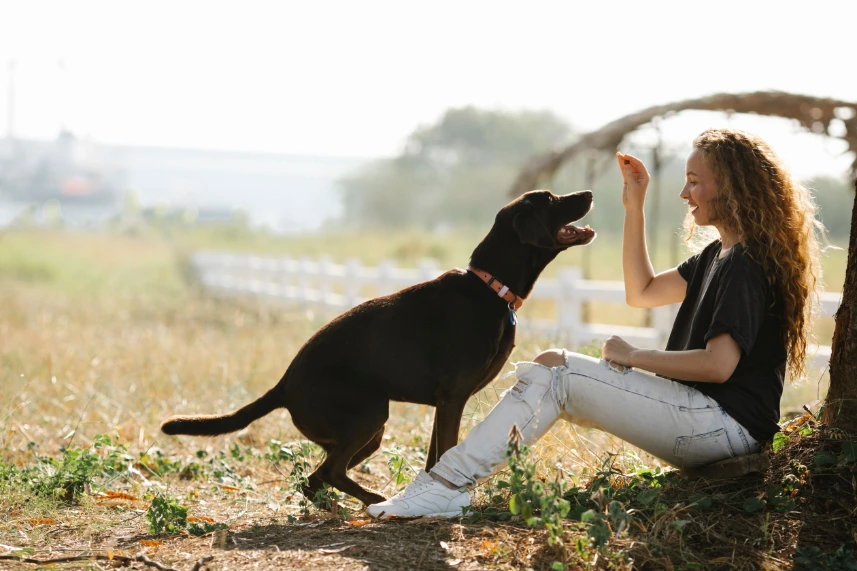
- Positive reinforcement dog training means adding something your dog wants (a treat, praise, a toy) right after a behavior, so that behavior happens more often.
- It comes from operant conditioning, the learning science B.F. Skinner described in the 1930s and 1940s.
- The American Veterinary Society of Animal Behavior (AVSAB) recommends reward-based methods for all dog training, including behavior problems.
- Timing matters most: the reward needs to land within a second or two of the behavior.
- Short sessions of 5 to 10 minutes work better than one long weekly marathon.
Positive reinforcement dog training is the method most owners picture when they think of “teaching” a dog. You mark the moment your dog does something right, then pay them for it. Do that enough times and the behavior sticks, because it works for the dog.
It sounds almost too simple. It isn’t. The method is easy to explain and surprisingly easy to get wrong, mostly because of timing. This guide covers what reward-based training is, why it works, where it fits in a real household, and how to start tonight.
What does positive reinforcement mean in dog training?
Positive reinforcement means adding something pleasant right after a behavior so the behavior becomes more likely. “Positive” means something is added. “Reinforcement” means the behavior increases. Nothing about the word “positive” means “nice” in the scientific sense.
Think of it like a vending machine. Your dog presses the “sit” button and a snack drops out. After a few tries, your dog starts pressing that button on purpose, because it reliably pays.
The idea comes from operant conditioning (learning through consequences), which psychologist B.F. Skinner studied at Harvard in the 1930s and 1940s. Operant conditioning sorts consequences into four groups, often called the four quadrants:
| Quadrant | What happens | Effect on behavior | Everyday example |
|---|---|---|---|
| Positive reinforcement | Something good is added | Behavior increases | Treat after a sit |
| Negative reinforcement | Something unpleasant is removed | Behavior increases | Leash pressure releases when the dog steps back to your side |
| Positive punishment | Something unpleasant is added | Behavior decreases | A collar correction for pulling |
| Negative punishment | Something good is removed | Behavior decreases | You turn away when a puppy jumps, so attention disappears |
One quick correction, because several popular articles get it wrong: negative reinforcement is not the same as punishment. Reinforcement always increases a behavior. Punishment always decreases it.
How does reward-based training actually work?
Reward-based training works by teaching your dog that a specific action predicts a specific payoff. The dog’s brain connects the two, and the action becomes a habit the dog chooses.
Three pieces make that connection happen:
- The cue: a word or hand signal, such as “sit.”
- The behavior: your dog’s rear end hits the floor.
- The marker and reward: a clear “yes!” or a click, followed by the treat.
The marker is the part most owners skip. A clicker (a small device that makes a sharp, consistent sound) or a short marker word works like a camera shutter. It “takes a picture” of the exact moment your dog got it right, so the treat that follows a second later still makes sense.
Does positive reinforcement dog training really work?
Yes, and the research behind it is solid. The AVSAB position statement on humane dog training, published in 2021, recommends that only reward-based methods be used for all dog training, including behavior modification. The statement says plainly that there is no evidence aversive training is necessary.
The studies AVSAB cites point the same way:
- Obedience: a 2004 study by Hiby and colleagues in Animal Welfare found obedience was highest in dogs trained only with rewards and lowest in dogs trained only with punishment.
- Stress: a 2020 study by Vieira de Castro and colleagues in PLOS ONE found dogs trained with aversive methods showed more stress behaviors and higher cortisol levels.
- Recall: a 2020 study by China, Mills and Cooper in Frontiers in Veterinary Science found reward-focused training was at least as effective as remote electronic collars for recall and stopping chasing.
Here’s the honest caveat. Much of this research is survey-based or done with small groups, and AVSAB itself notes that correlation does not prove cause. Still, the direction of the evidence is consistent, and that consistency is hard to ignore.
What are the benefits of positive reinforcement for dogs?
The biggest benefit is a dog who wants to work with you instead of a dog who works to avoid trouble. That shift changes everything from recall at the park to calm behavior when guests arrive.
Other benefits owners notice:
- A stronger bond: your hands, voice, and presence predict good things.
- Confidence in nervous dogs: shy dogs learn that trying new things pays off.
- Faster learning of new skills: dogs who aren’t afraid of being wrong offer more behaviors.
- Fewer side effects: no risk of a dog linking pain or fear to people, other dogs, or places.
- Family-friendly: kids and older adults can use it safely and consistently.
We’d start every new skill with rewards. Here’s why: a dog has to understand what you want before any other tool can mean anything. Rewards are the clearest way to say “that, exactly that.”
How do you start positive reinforcement training at home?
Start positive reinforcement training by picking one simple behavior, one marker, and a pocket full of tiny treats. Then practice for five minutes in a quiet room.
- Choose your rewards. Use pea-sized, soft treats your dog loves. Rank them: kibble for easy work, chicken for hard work.
- Charge your marker. Say “yes!” and immediately give a treat, ten times in a row. Your dog now knows the word means food is coming.
- Pick one behavior. “Sit” is the classic first choice because dogs do it naturally.
- Lure, then fade the lure. Move a treat over your dog’s nose so the rear goes down. Mark and reward. After a few reps, use the same hand motion with no treat in it.
- Add the cue. Once your dog sits reliably to the hand signal, say “sit” just before the motion.
- Keep sessions short. Five to ten minutes, two or three times a day, beats one long session.
- Change one thing at a time. Add distance, duration, or distraction, but never all three at once.
Puppies can start as early as 8 weeks. If you have a young dog, our puppy training program builds these foundations in private lessons, and our guide on how to socialize a puppy pairs well with this method.
What are the most common positive reinforcement mistakes?
The most common mistake is late timing. If the treat arrives three seconds after the sit, your dog may think the reward was for standing back up.
Watch for these too:
- Rewarding the wrong moment: petting a dog who is jumping on you rewards jumping.
- Treats that are too big: your dog fills up fast and loses interest.
- Repeating the cue: “sit, sit, SIT” teaches your dog that the cue is “sit sit sit.”
- Moving too fast: practicing in the kitchen does not mean your dog can do it at a busy trailhead.
- Never fading food: phase from treats every time to random rewards and life rewards, like the door opening or the leash clipping on.
Positive reinforcement also does not mean letting your dog do whatever it wants. AVSAB says this directly. Good reward-based training still sets clear rules. It just teaches them by managing the environment and rewarding the right choice, rather than waiting for a mistake.
Can positive reinforcement fix leash pulling, reactivity, or aggression?
Positive reinforcement can help with leash pulling, reactivity, and many aggression cases, but these problems usually need a structured plan rather than treats alone. The method stays the same. The setup gets more careful.
For pulling, you reward your dog for being next to your leg, so that spot becomes the best place on the walk. Our post on how to stop a dog from pulling on the leash walks through that in detail.
For reactivity, trainers often pair the trigger (a dog, a bike) with something great at a distance your dog can handle. Over time, the trigger starts to predict good things. That process has a name, counter-conditioning, and it is the backbone of most reactivity training.
Aggression is different. Any dog who bites, or tries to, needs a professional assessment before you start home training. Please don’t try to work through it alone.
Is positive reinforcement the only way to train a dog?
No, but it should be the foundation of whatever method you choose. Trainers fall into two broad camps: reward-only (often called force-free) and balanced, which combines rewards with corrections or tools.
AVSAB recommends reward-based methods only. Many balanced trainers, including trainers here in Salt Lake County, use rewards for teaching and add other tools later for specific cases. Whichever trainer you hire, ask how they teach a brand-new behavior. If the answer doesn’t start with rewards, keep asking questions.
If you’d like a second set of eyes on your dog, our in-home dog training starts with a $75 in-home assessment in Millcreek, Sandy, Salt Lake City, and nearby areas. Or contact us for a free phone consultation.
FAQs
What is an example of positive reinforcement in dog training?
A simple example is giving your dog a treat the moment they sit when you say “sit.” The treat is added (positive) and sitting becomes more likely (reinforcement). Tossing a ball when your dog comes when called works the same way. Any reward your dog values counts, as long as it arrives right after the behavior.
Is positive reinforcement good for stubborn dogs?
Yes. Most “stubborn” dogs are under-motivated or confused, not defiant. Raise the value of the reward (real chicken instead of dry biscuits), lower the difficulty, and train in a quieter spot. Dogs bred for independent work, like hounds and northern breeds, often respond very well once the payoff is worth their effort.
How long does positive reinforcement training take?
Simple behaviors like sit or down can show up within a few short sessions. Reliable behavior around distractions takes weeks of regular practice. A good benchmark is five to ten minutes, two or three times a day. Consistency counts more than total hours, so short daily sessions usually beat a long weekend session.
Do you have to use treats forever?
No. Once a behavior is solid, move from rewarding every time to rewarding at random. Then swap some food rewards for life rewards your dog already wants, like going outside, greeting a friend, or getting the leash clipped on. Most dogs keep performing reliably because the behavior has become a habit that still pays now and then.
Does positive reinforcement work for older dogs?
Yes. Adult and senior dogs learn well with rewards, and the method is gentle on aging joints and nervous temperaments. You may need shorter sessions and softer treats. Older rescue dogs in particular often blossom once they learn that offering behaviors is safe and rewarding rather than risky.
What is the difference between positive reinforcement and bribing?
A bribe is shown before the behavior to get it. A reward is given after the behavior to strengthen it. Luring with food is fine early on, but fade it quickly so the treat appears only after your dog responds. If your dog only listens when they can see food, the lure stayed too long.
Bottom line
Positive reinforcement dog training rewards what you want, right when it happens, so your dog chooses it again. It is backed by veterinary behavior experts, it builds trust, and you can start with five minutes and a handful of treats tonight. For help turning those first wins into reliable everyday manners, look at our dog obedience training programs.