
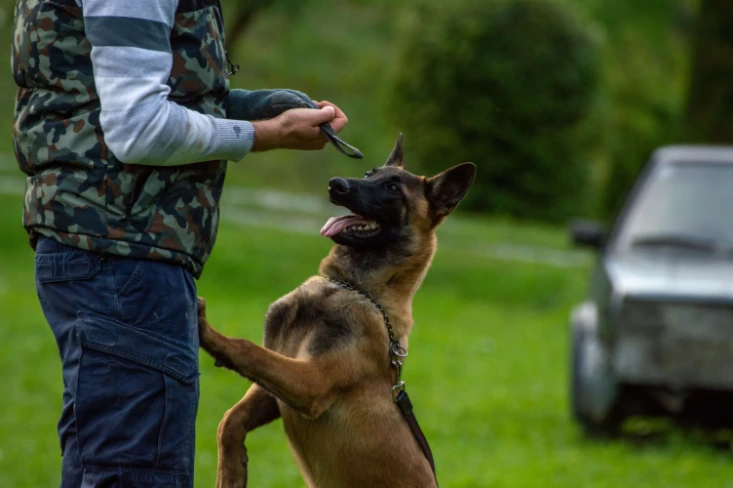
E-collar training for dogs is a method that uses a remote-controlled collar to communicate with your dog at a distance. When it’s done well, the collar works as a quiet reminder, not a punishment.

- What it is: e-collar training uses a remote and a collar receiver to send a tone, vibration, or low-level stimulation that reminds a dog of a cue it already knows.
- How it works: at the right “working level,” the sensation acts like a tap on the shoulder. The dog turns it off by doing the cue, which is negative reinforcement.
- The order matters: teach the behavior first, condition the collar second, and add distractions last.
- The debate is real: groups like AVSAB oppose aversive tools, while balanced trainers argue that low-level, conditioned use is humane. Results depend heavily on the handler.
- Best use: reliable recall and off-leash control. It’s the wrong tool for fear-based behavior.
That’s the part most people miss. The tool itself doesn’t train your dog. The process does.
What is an e-collar for dogs?
An e-collar is a remote training device made of a handheld transmitter and a receiver that sits on your dog’s collar. The receiver can deliver three types of signals:
- Tone: a beep, often used as a “pay attention” cue.
- Vibration: a buzz, stronger than tone. Some sensitive dogs only ever need this.
- Static stimulation: a low-level electrical pulse, adjustable across dozens or even 100 levels on modern units.
Static stimulation works much like the TENS unit a physical therapist uses on a sore back. At low levels, it’s a tingle or a muscle twitch, not pain.
People often call these tools “shock collars.” The older units from decades ago really did have one or two harsh settings. Modern e-collars are very different, with fine adjustments that let a trainer find the lowest level a dog can feel.
How does e-collar training for dogs actually work?
E-collar training works through negative reinforcement. You apply a mild sensation as you give a known cue, and the sensation stops the moment the dog complies. The dog learns that doing the behavior turns the feeling off.
Here’s an analogy. Imagine a friend lightly tapping your shoulder in a loud restaurant. The tap isn’t painful. It just says “Hey, over here.” Once you turn around, the tapping stops. That’s what a properly set e-collar feels like to a well-conditioned dog.
There’s also a second way people use these collars: positive punishment, which means applying a stronger sensation to stop a behavior. That model usually requires higher levels, and it’s where most of the welfare concerns come from. We don’t train that way.
What is the “working level” on an e-collar?
The working level is the lowest stimulation setting your dog notices in a given environment. For most dogs, it’s surprisingly low.
You find it by starting at the bottom and moving up one step at a time in a quiet space. You’re watching for subtle signs:
- Too low: no reaction at all.
- Just right: an ear flick, a head turn, a slight pause, or a curious glance at the neck.
- Too high: a yelp, a flinch, freezing, or trying to bolt.
The working level can change. A dog who notices level 8 in the living room might need level 12 near ducks at Sugar House Park. That’s why good e-collar training includes a plan for adjusting levels on the fly, not a “set it and forget it” number.
What are the steps in e-collar training?
E-collar training follows a set order, and skipping steps is the most common reason it goes wrong. Here’s the process we follow with every dog:
- Teach the behavior first. Your dog should know sit, down, place, and come on a leash, using food and praise, before the collar means anything.
- Make the collar boring. Your dog wears the collar, switched off, during meals, walks, and play for several days. It becomes as normal as a regular collar.
- Find the working level. In a quiet room, the trainer finds the lowest level the dog notices.
- Pair the stimulation with a known cue. The trainer taps the button as they say “come,” gently guides with the leash, and turns the stimulation off the moment the dog moves toward them. Then comes a reward.
- Add distance and distractions slowly. Backyards, then quiet streets, then busier parks. The leash stays on for safety until responses are consistent.
- Fade the collar’s role. The goal is a dog who responds to your voice. The collar becomes a backup, not a crutch.
E-collar conditioning is non-negotiable in our programs. Dogs that get stimulation before they understand the cue often get confused or worried, and that’s what gives the tool a bad reputation.
Is e-collar training safe and humane?
E-collar training is debated, and you deserve both sides. Some veterinary groups oppose it outright. Some trainers and researchers argue that low-level, conditioned use is humane.
The case against: the American Veterinary Society of Animal Behavior (AVSAB) said in its 2021 Humane Dog Training Position Statement that aversive methods should not be used in training. A 2020 study by China, Mills, and Cooper in Frontiers in Veterinary Science compared 63 dogs and found that reward-focused trainers got faster responses to “come” and “sit” than the e-collar group.
The case for: a 2021 commentary by Sargisson and McLean in the same journal argued that the study tested dogs mostly on-lead and close to the trainer. It said the results don’t tell us much about off-leash reliability, which is exactly where most owners want help.
Where do we land? We’d use an e-collar only after a dog has a solid reward-based foundation, only at working level, and only for goals like off-leash recall. Used that way, most dogs show no stress at all. Used carelessly, any tool can cause harm.
What can e-collar training help with?
E-collar training is most useful for distance work, where a leash can’t reach. Common goals include:
- Reliable recall: getting your dog to come back, even when a rabbit takes off. See our guide to recall training for dogs.
- Off-leash hiking: Utah’s trails are a big reason our clients want this. Our article on off-leash dog training covers what that freedom requires.
- Loose leash walking: as a backup for dogs who already understand heel. If pulling is the main issue, start with how to stop a dog from pulling on the leash.
- Place and boundary work: holding a “place” command when guests arrive.
When is an e-collar the wrong choice?
An e-collar is the wrong choice when fear, anxiety, or pain drives the behavior. Adding pressure to a scared dog can make the fear worse.

Skip the e-collar, or put it on hold, if your dog:
- Is under 6 months old or hasn’t learned basic cues yet.
- Reacts to other dogs or people out of fear. Our reactivity training program is a better place to start.
- Shows aggression, guarding, or bites. These dogs need a behavior plan first, which is what our aggressive dog training addresses.
- Has a sudden behavior change that could signal pain. A vet check comes first.
Being clear about these limits matters to us. A trainer who recommends an e-collar for every dog is selling a tool, not a solution.
How long does e-collar training take?
Most dogs need 1 to 2 weeks of short, daily sessions to complete collar conditioning. Reliable off-leash recall usually takes several more weeks of practice around distractions.
At K9 Harmony, our e-collar training program runs over six private in-home lessons with our trainer Brittany. Collar conditioning starts in session one, and homework follows each lesson.
The biggest factor isn’t the dog. It’s you. Owners who practice 10 to 15 minutes a day see the fastest progress.
Frequently asked questions
Does an e-collar hurt a dog?
At the correct working level, a conditioned dog shows only a mild reaction, such as an ear flick or head turn. Static stimulation feels similar to a TENS unit. A yelp or flinch means the level is too high. Owners can feel the collar on their own hand before training starts, and we encourage that.
Is an e-collar the same as a shock collar?
Technically, both deliver electrical stimulation, so many veterinary groups use the terms interchangeably. In practice, modern e-collars offer many fine levels plus tone and vibration, while older shock collars had a few harsh settings. How the tool is used matters more than the name.
What age can you start e-collar training a dog?
Most trainers recommend waiting until a dog is at least 6 months old. Just as important, the dog should already know basic cues like sit, down, and come on a leash. We assess readiness during an in-home evaluation.
Will my dog need to wear the e-collar forever?
No. The goal is a dog that listens without it. Most dogs are gradually weaned off the collar, though many owners keep it on for off-leash adventures as a safety backup, similar to a seatbelt you rarely need.
How long can a dog wear an e-collar each day?
Many manufacturers and trainers advise against wearing the receiver for more than 8 to 10 hours a day. Check the fit and skin under the contact points daily, rotate the collar’s position, and take it off at night to prevent pressure sores.
Can I do e-collar training myself?
You can handle some early steps, like getting your dog used to wearing the collar. Finding the right working level and timing the stimulation are harder to learn from videos. Having a trainer guide those steps prevents the most common mistakes.
The bottom line on e-collar training
E-collar training works by turning a mild sensation into a clear message your dog already understands. Done in the right order, at the right level, it can give your dog more freedom, not less.
If you’re in Salt Lake City, Sandy, Millcreek, or nearby, book a consultation with K9 Harmony and we’ll help you decide whether an e-collar fits your dog.