
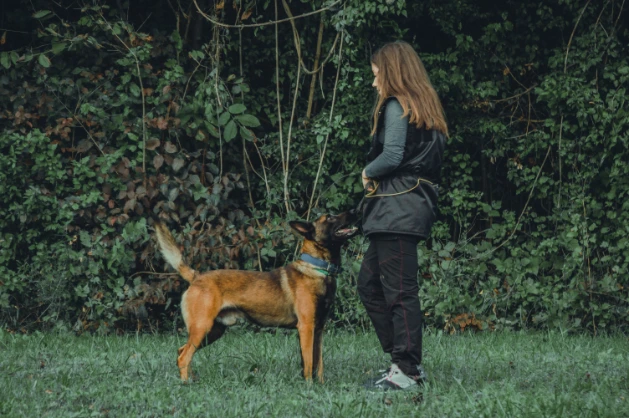
What you need to know
- Recall training for dogs works when coming to you pays better than whatever your dog is chasing. Pick one cue, reward every return, and build in small steps.
- Practice indoors first, then on a long line, then around real distractions. Skipping a stage is the fastest way to lose your recall.
- Call once. Never use your recall cue for baths, nail trims, or the end of playtime.
- No dog is 100% reliable, so keep off-leash time to safe, contained places.
Recall training for dogs is the skill of teaching your dog to stop what they’re doing and return to you on cue. Most owners write off a dog who ignores them as stubborn. We see it differently: it’s almost always a training gap, not a character flaw.

Our opinion, stated plainly: start recall on day one, long before anyone talks about off-leash freedom. A dog who comes reliably earns more freedom, not less. Here is the step-by-step approach we teach owners across Salt Lake County, plus the mistakes that quietly undo it.
What is recall training for dogs, and why does it matter?
Recall training teaches a dog to come back to you on a specific cue, even when something more exciting is nearby. The finished skill is called a reliable recall.
It matters because a dog who won’t come when called can’t safely enjoy freedom. RSPCA Australia’s knowledge base, updated in December 2025, treats recall as a safety skill and says to never practice off-leash near roads.
Think of your recall cue as a coupon that has to be honored every time. A store that honors it eight times out of ten teaches shoppers to stop bothering. Your dog does the same math.
How do you choose a recall cue and a reward your dog can’t resist?
Choose one short recall word, use it only for recall, and pay with something your dog values more than the environment. “Come,” “here,” and “front” all work, as long as everyone in your house uses the same one.
- Cue: Say your dog’s name first to get attention, then the recall cue once, in a happy voice.
- Reward: Use high-value treats like chicken or cheese, and hand over a handful for the hardest returns. The RSPCA calls that big payout a jackpot reward.
- Marker: A quick “yes” the instant your dog turns toward you tells them exactly what earned the reward.
This is positive reinforcement (rewarding the behavior you want so it happens more often), and it’s the backbone of every step below.
How do you teach a dog to come when called, step by step?
Start in a quiet room with your dog a few feet away, then add one challenge at a time. Move on only when your dog succeeds easily.
- Call once. Say your dog’s name, then your cue, and reward the moment they reach you with praise and a treat.
- Make it a game. Back away or jog the other way so your dog chases you. Run away from them, never after them, as the RSPCA advises.
- Add distance slowly. Step back a few feet at a time, and only after your dog succeeds at the current distance.
- Ask for a sit. The American Kennel Club adds a sit once the basic recall is solid, so your dog arrives close and settled.
- Teach a collar touch. Pair a light hold of the collar with a treat so being caught always feels good. The AKC calls this the “gotcha” game.
- Change rooms. Repeat every step in each room of the house before you head outside.
Stuck at step one, or not sure why your dog ignores you? A trainer can usually spot the missing piece in a single visit, and our in-home dog training happens where your dog actually lives.
How do you build a reliable recall on a long line and around distractions?
Move outdoors only on a long line, then raise the difficulty in small, planned steps. A long line is a 20 to 30 foot training leash that lets your dog roam while you keep control, and the AKC suggests starting on a 6-foot leash before graduating to it.
Picture a new driver who has only practiced in an empty parking lot. Highway traffic is a different test. Your dog’s kitchen recall is the parking lot, and a park full of squirrels is the highway.
Work through three levels of distraction:
- Low: your yard or a quiet street.
- Medium: a calm park with a few people far away.
- High: other dogs, joggers, wildlife, or food on the ground.
Use the line to guide, not to reel your dog in. If they ignore you, gather the line as you walk toward them and try again somewhere easier. The RSPCA says recall should be about 80% reliable on a long line in highly distracting places before you try off-leash practice in a quiet public spot.
Not sure your dog is ready? Our off-leash readiness checklist lists seven signs to look for. If walks start with a tight leash, fix leash pulling first, since a dog dragging you down the street isn’t checking in.
Which mistakes make a dog stop coming when called?
Most recall problems trace back to what the cue has come to mean. If coming means something unpleasant, dogs learn to stay away.
- Repeating the cue. Saying “come” five times teaches your dog to ignore the first four. Call once, then calmly collect your dog and retry somewhere easier.
- Calling for bad news. Baths, nail trims, crating, and ending play all spoil the cue, according to Maddie’s Fund. Walk over and leash your dog instead.
- Scolding on arrival. Even a slow return earns praise. Punishing a late arrival punishes the arriving.
- Chasing for fun. If chasing is a game, your dog may dash into danger the day you chase for real.
- Calling when you can’t follow through. If you’re sure your dog won’t come, skip the call and use the line or walk to them.
What is an emergency recall, and does your dog need one?
An emergency recall is a separate cue, paired with the best reward your dog has ever tasted, that you save for real danger. Think of it as a fire alarm: it only works if it never goes off for toast.
We’d say almost every dog needs one, because everyday recall will sometimes fail. Teach it close to you, pay with a jackpot every time, and never use it casually. Our off-leash training guide goes deeper on emergency recall.
Do you need an e-collar for recall training?
Not for a solid foundation, and the research doesn’t treat it as a requirement. A 2020 study in Frontiers in Veterinary Science followed 63 dogs with recall problems and found dogs handled by reward-focused trainers responded better to a single command, and the authors concluded an e-collar wasn’t necessary for recall.
It’s one study, and trainers still disagree. We only introduce an e-collar when it’s the right fit, as a communication tool and never as punishment, and only after reward-based foundation work. If your dog still can’t hold recall around heavy distractions, ask about e-collar training.
Frequently asked questions about recall training
How long does it take to train a reliable recall?
Plan on months, not weeks. Maddie’s Fund says holding up around high-level distractions takes several months of practice, and the RSPCA calls a 100% reliable recall unrealistic. Dogs with strong prey drive often need longer. Short daily sessions of five minutes beat one long weekly session, because each successful return is a repetition your dog gets paid for.
When should I start puppy recall training?
Start the day your puppy comes home. VCA Animal Hospitals advises starting early because a puppy who comes when called is safer. Keep sessions short, playful, and low-distraction, and let your puppy win easily at first. Our puppy training program and our guide on how to socialize a puppy pair well with early recall work.
Can you teach an older dog to come when called?
Yes. The steps are the same, but older dogs may need more repetitions, especially if earlier training was inconsistent or the old cue picked up unpleasant meanings. Choose a fresh recall word if the old one is spoiled, and keep rewards generous. Old dogs learn new tricks just fine, they simply need clear, consistent practice.
Why does my dog come inside but ignore me outside?
Because outdoors is a harder test and the skill hasn’t generalized yet. Generalization means practicing one skill in many places until it holds anywhere. The AKC warns that perfect indoor recall says little about outdoor recall. Go back a stage, use the long line, and raise distractions gradually until the yard feels as easy as the kitchen did.
Should I use my dog’s name as the recall cue?
Use the name to get attention, then a separate short cue for the recall itself. Trainers differ here, and some avoid the name as the cue entirely. Either way, keep the name positive so your dog always expects something good when they hear it. Never use the name to scold, or it stops predicting rewards.
Want help building recall that holds up in real life?
Recall gets practiced, tested, and tweaked for years, so a second set of eyes helps. We work with dogs and their owners in your own home and neighborhood across Salt Lake County. Our dog obedience training covers recall, leash manners, and impulse control in six private lessons. When you’re ready, book a free call consultation.